
Are spiders in your home giving you the creeps? These critters might make your skin crawl — but most are actually harmless. Still, it’s understandable if you’d rather not share any living space with them!
When should you get professional pest control for spiders? How do you know which ones are harmful? Why do spiders even come into your home in the first place?
Our guide to spiders provides the answers to these questions and tons of helpful information about these pests!
A Guide to Spiders: Quick Facts to Know
Let’s start with some interesting facts about these critters:
1. Spiders aren’t considered insects. They’re in a group called arachnids, including scorpions and ticks.
2. Not all spiders have eight eyes. Some have six or even fewer — but no spiders have an odd number of eyes.
3. Some spiders, like jumping and wolf spiders, stalk their prey. Others, like funnel weavers, sit on their webs and wait for prey to come to them.
4. Spiders produce silk for different uses, including building webs and holding eggs until they’re ready to hatch.
5. Female spiders can lay up to a few thousand eggs at a time — making it important to get spider control if you have an infestation!
Are Spiders Helpful?
Yes, many spiders are actually good to have around! Most of the native species in our area aren’t a threat to people or pets. Instead, they’re a threat to mosquitoes and other insect pests that most of us don’t want around. Feeding on them helps reduce their numbers.
But not every spider is completely harmless. A couple of species, including black widows and brown recluses, are dangerous to humans and pets due to their venomous bites.
Types of Spiders
What kinds are found in Ohio? Several species make their home in the Buckeye State — including invasive ones. These are some of the more common spider types:
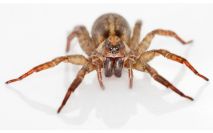
Wolf Spiders
These big spiders can grow to be up to an inch long. Despite their size, they’re not aggressive or dangerous to people. They run after prey to catch it instead of spinning webs. Wolf spiders can range from brown or tan to black in color and have darker markings.
 Funnel Weavers
Have you ever seen funnel-shaped webs in your yard? Funnel weavers make those kinds of webs. These spiders, also known as grass spiders, are medium to large and typically have a lighter coloring with dark lines on their back.
Orbweavers
If you’ve seen large, round webs in trees or other areas outside, you have orb weavers around. These harmless spiders can be medium or large in size, with some having bright yellow and black coloring.
Jumping Spiders
Thanks to their leaps and jumps, jumping spiders are easy to identify. They come in many colorings and markings. Like many other spiders, jumping spiders tend to be active during the day instead of at night.
Joro Spider
This is a newer, invasive species that’s making its way up the East Coast and spreading to other areas of the U.S. Female Joro spiders can grow to be an inch in body length and up to 4 inches in leg length! They’re not considered a threat, but their large webs can be a nuisance.
Brown Recluse
This is one of the harmful spider species found in Ohio. Brown recluse spiders grow to around 5/8 of an inch in length and have a coloring that ranges from light to dark brown. But they’re more easily identified, thanks to the violin marking on their backs. Their bites can lead to serious health complications!
Black Widow
These spiders are best known for the red hourglass-shaped markings on their backs. They grow to be around 3/4 of an inch in length. Black widow spiders build webs close to the ground, where they can be hard to spot. Their venomous bites often require medical care.
Why Do Spiders Come Into the House?
You might not mind seeing them outdoors, where they catch and eat flying insects and other pests. But what brings them into homes? They may seek entry into your house for any of the following reasons:
- They’re looking for food
- They want to find shelter
- They’re searching for moisture
- They’re looking for mates
What Attracts Spiders?
What specific kinds of things make homes and buildings so attractive to spiders? They might invade your house due to any or all of the following factors:
- Plenty of food sources, such as an insect infestation in your home
- Damp areas, such as basements and crawl spaces, provide them with moisture
- Sheltered areas that protect them from the weather and birds and other predators
- Spaces where they’re able to breed and raise young
What Do Spiders Hate?
Birds, frogs, cats, and other animals that prey on spiders are among the things they hate the most! But there are other things they really don’t like, including a lack of hiding spaces. Most spiders need somewhere safe and out of the way to build webs or look for prey. A lack of clutter makes it harder for them to find these spaces.
What Do Spiders Eat?
These critters mostly feed on insects, like mosquitoes and flies. But sometimes, they’ll eat fellow spiders! Some spiders also add plant material to their meals, such as pollen, sap, or nectar.
If you see spiders in your home or near your house, that usually means you’ve got insects around. They might catch flies or gnats inside your home or mosquitoes out in your yard.
Why Do You Have Spiders in Your Yard and Outside Your House?
The main reason for having these around is that your property provides them with a steady food supply. But spiders also look for other things that some yards and gardens offer. A few of the most common reasons for spiders outside homes include:
- Outdoor lighting that attracts bugs
- Water sources, such as bird baths
- Mosquitoes or other outdoor insect infestations
- Eaves, plants, and other areas that provide shelter from predators and the elements
Does DIY Spider Pest Control Work?
Planning to use your own methods for ridding your home of spiders? You might have some success vacuuming up spiders or using other “repellants,” just note that natural repellants aren’t a permanent deterrent. You have to reapply them to surfaces to keep them working.
DIY spider pest control might be ok to use if you have a few spiders around. But what if you find black widows or brown recluses? Or what if you have a big infestation? In these cases, you should call on qualified and experienced pest control technicians for help.
Will Spiders Go Away on Their Own?
If you’re skittish about dealing with spiders or don’t really want them around long, can you just wait for them to leave? Some spiders might go away without your help. Or they might leave if you remove their food sources, such as having a bug infestation taken care of professionally.
But if you have a lot of spiders due to an infestation, they’re unlikely to go away on their own. If you have venomous spiders, it’s not safe to wait for them to leave. As long as they’re around, you run the risk of being bitten.
Note that black widows and brown recluses can be hard to spot. Some hide in closets or other hidden areas. Reaching inside their hiding spots and startling them can mean getting an unexpected — and dangerous — bite!
How to Prevent Spiders
What can you do to avoid having to deal with any spiders at all? You may not be able to totally prevent them from being in your yard or other outdoor areas — and that’s ok as long as they’re harmless! But you can take steps to keep them from becoming a problem inside your home or just outside it, such as:
- Closing up entry points, like cracks around doors
- Treating other pest infestations to remove their sources of food
- Fixing leaks to take away moisture sources
- Using yellow sodium vapor lights for outdoor lighting to avoid attracting bugs
- Clearing vegetation from right next to your house
- Cleaning up clutter inside your home to reduce any hiding spots
A Few Fun Facts About Spiders
As a bonus, we leave you with some other spider facts you may not be aware of:
1. Jumping spiders are able to jump up to 50 times their own body length!
2. Some spiders, including fishing spiders or dolomites spiders, fish for prey on water surfaces instead of catching it on webs or stalking it on land.
3. Despite having multiple eyes, spiders can’t see well at distances — they all have nearsighted vision
4. “Daddy longlegs” are used for a few kinds of critters, but only one is a spider — cellar spiders.
5. Spider silk is stronger than steel due to its tensile strength!
Why Choose ScherZinger for Spider Control?
Looking for help with a spider infestation? Or do you have an insect problem that’s attracting spiders? We can help! At ScherZinger, we offer effective and affordable residential and commercial pest control for customers in the Greater Cincinnati area, including Dayton and Columbus. Our technicians can rid your home of spiders — and other pests!
